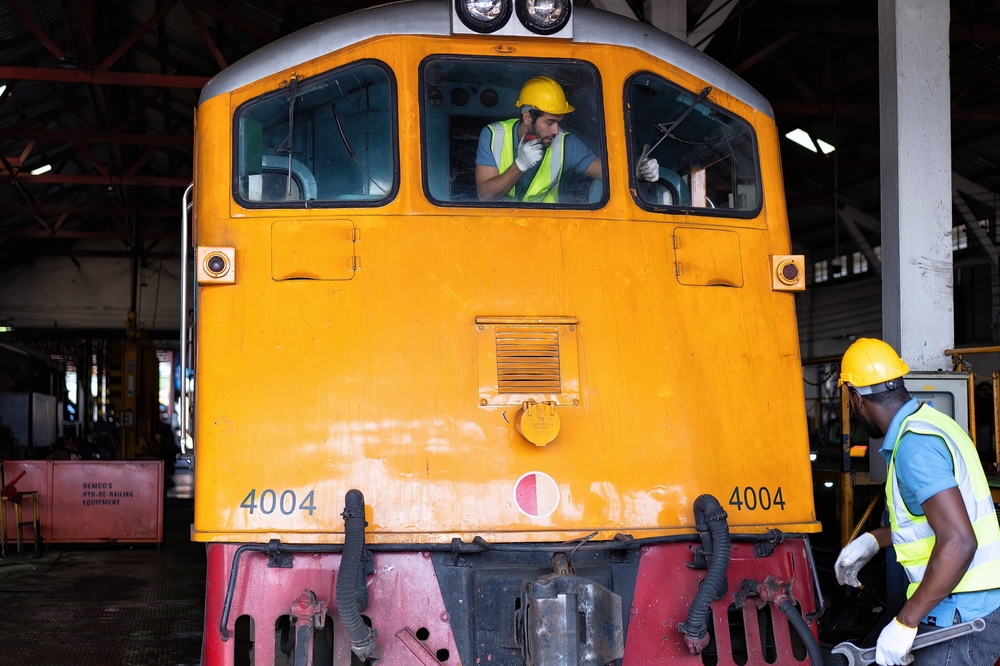
Remote control locomotive operations were supposed to make railroad yards safer. Instead, they created a whole new category of injuries. The technology allows a conductor to move locomotives and rail cars around a switching yard using a handheld transmitter, rather than an engineer sitting in the cab. It has been in widespread use since the early 2000s, primarily on freight railroads like CSX Transportation and Norfolk Southern. And the attorneys at our firm have handled a growing number of FELA injury cases tied directly to this equipment.
The reason railroads adopted remote control operations is not safety. It is cost. The technology lets companies eliminate the yard engineer position entirely. One conductor wearing a remote control vest can do the work that used to require a two-person crew. Fewer workers on the payroll means more profit. But those same workers are now being asked to do a harder, more physically dangerous job with equipment that was not designed with their safety as the top priority.
How Remote Control Operations Work in Railroad Yards
In a traditional switching operation, a certified engineer sits in the cab of a small-yard locomotive and controls its movements, while a conductor works on the ground, directing which cars are coupled, uncoupled, and routed to different tracks. The two communicate by radio.
In a remote-controlled operation, the conductor performs both jobs. They carry a transmitter, roughly the size of a bread box, mounted in a vest that sits against their chest or belt. From that device, they control the locomotive’s throttle, brakes, horn, and bell. They are also still responsible for riding the side of cars during shoving movements, lining switches, and communicating with the yardmaster.
That combination of tasks, controlling a locomotive remotely while physically riding on moving equipment, is where the injuries happen.
The Specific Dangers Railroad Workers Face
We have seen the same patterns in case after case. The injuries tend to fall into a few categories, all of which are tied to how the equipment is designed and how the railroads deploy it.
The Vest and the Box
The remote control unit has to go somewhere, and the railroads decided it would go on the worker’s body. The vest that holds the transmitter is bulky and awkward. When a conductor has to ride the side of a rail car, holding onto a metal ladder as the cars move down the track, that box creates a real problem. It pushes the worker’s body farther out from the car than they normally would be. In a standard riding position without the vest, a conductor can keep their body tight to the ladder. With the transmitter hanging off their midsection, they cannot.
This is a danger for two reasons. First, when the train stops during a shoving movement, there is a violent, wave-like action called slack action, in which each car impacts the next at the coupler. The jostling can be extreme even under normal conditions. With the vest pulling the worker away from the car, their ability to hold on to the car is reduced. Workers get thrown. Second, the extra width created by the vest means the worker sticks out further from the side of the car. In a yard with tight clearances between tracks, between cars on adjacent tracks, or near fences and signal equipment, that extra distance increases the risk of the worker getting struck or clipped by a passing object.
Brake Response Delay
There is a time delay built into the system. When a conductor operating the remote control unit tells the locomotive to apply the brakes, there is a pause before the locomotive responds. It is not instantaneous. In a yard environment where cars are being shoved at close range, and distances are measured in feet, not hundreds of yards, that delay can be the difference between a controlled stop and a collision. Seconds matter in these situations, and the system does not respond as quickly as a physically present engineer operating the controls in real time. An engineer in the cab has direct mechanical control. A conductor with a transmitter is relying on a radio signal being sent, received, processed, and then executed by the locomotive. That gap in response time creates a hazard that the railroads have not adequately addressed.
Inadequate Training
The FRA requires railroads to submit training programs for remote control operations. Those programs are supposed to include at least five days of hands-on training on the equipment before a worker is certified to use it. In practice, we have seen that railroads do not always follow their own training protocols. Some workers are assigned to remote-control tasks with minimal instruction. Others receive classroom training but little or no time actually operating the equipment in a yard setting before they are expected to do it on their own.
When a worker gets hurt because they were not properly trained on equipment the railroad required them to use, that is a straightforward FELA claim. The railroad has an obligation to provide adequate training, and failing to meet that obligation is negligence.
Shifting Company Policies
CSX at one point told workers they could not ride in cars during remote-controlled operations. Then the railroad reversed course and resumed allowing it. If riding cars during RCO was too dangerous to allow, it did not suddenly become safe because the company changed the memo. A FELA lawyer who has handled these cases can use that kind of policy history to show that the railroad knew about the danger and chose to put workers back in it anyway.
The Two-Person Crew Rule and What It Means for RCO
In April 2024, the FRA issued a final rule generally requiring two-person crews on freight trains. The rule was a response to years of industry efforts to reduce crew sizes, which railroad unions had fought against on safety grounds. It requires a locomotive engineer and a conductor on most train operations.
However, the FRA specifically exempted remote control operations from the two-person crew requirement. The agency reasoned that existing safety measures for RCO were sufficient. Railroad unions disagreed, and the exemption remains a point of contention. Meanwhile, several major railroads filed lawsuits to block the two-person crew rule entirely.
The practical effect is that conductors working remote-control assignments in switching yards continue to operate alone, handling both the groundwork and the locomotive controls simultaneously. The dangers described above have not been addressed by the new rule.
Filing a FELA Claim for an RCO Injury
Railroad workers are not covered by state workers’ compensation. Under the Federal Employers Liability Act, a railroad employee who is injured on the job can sue the employer for negligence. To succeed on a FELA claim involving remote control operations, you generally need to show that:
- The railroad failed to provide safe equipment, such as a poorly designed or ill-fitting RCO vest
- The railroad did not provide adequate training on the remote control unit
- The railroad created unsafe working conditions by requiring workers to ride cars while wearing the RCO vest in tight-clearance areas
- The railroad’s policies or practices contributed to the injury
The standard for negligence under FELA is lower than in most civil cases. You do not have to prove the railroad was the sole cause of the injury. You have to prove that the railroad’s negligence played a role.
A FELA lawyer who handles railroad injury cases can review the circumstances of your accident, obtain the railroad’s training records and operating rules, and determine whether the company’s use of remote control operations put you in a position that caused your injury.
Talk to a Firm Built on Railroad Cases
Shapiro, Washburn & Sharp was started by a former railroad worker who was injured on the job, went to law school, and built a practice dedicated to representing people like himself. The firm has handled FELA injury claims for conductors, engineers, brakemen, trackmen, and other railroad employees across the Eastern United States since 1985.
If you were hurt during a remote control operation or any other railroad assignment, contact Shapiro, Washburn & Sharp to discuss your case and find out how we can help. Call 833-997-1774 for a free consultation. Shapiro, Washburn & Sharp has offices in Virginia Beach, Portsmouth, Suffolk, Hampton, Norfolk, and Chesapeake.