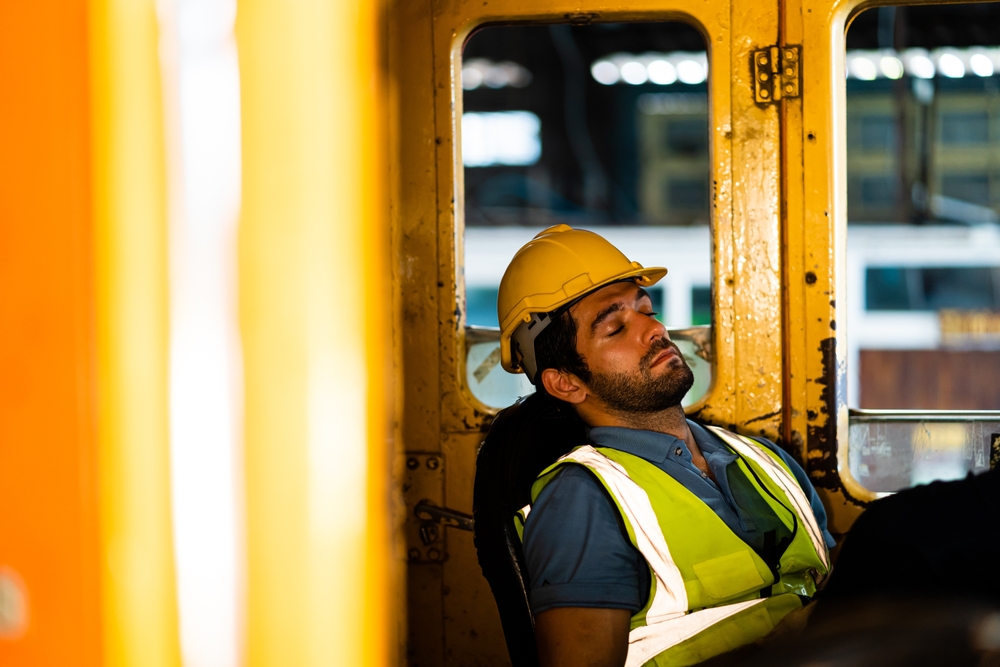
Railroad work doesn’t follow a 9-to-5 schedule. Trains run around the clock, across time zones, in every kind of weather. For the engineers, conductors, brakemen, and trackmen who keep those operations moving, the demands can be relentless. Irregular shifts. Extended hours. Unpredictable call times. Sleep schedules that get pushed, pulled, and compressed until there’s nothing left to give.
That kind of schedule takes a toll. And when it does, it’s not just the worker who pays the price.
Fatigue Is One of the Biggest Safety Problems in the Railroad Industry
The National Transportation Safety Board has documented fatigue as a contributing factor in multiple serious train collisions over the years. It’s not a new concern. What’s changed is the growing body of evidence showing just how widespread the problem is, and how much the industry’s own scheduling practices contribute to it.
The Federal Railroad Administration took formal steps to address this when it introduced fatigue management plan requirements for railroad companies back in 2012. But an in-depth FRA study that followed found something troubling: the workers most at risk for sleep deprivation are the very people actually driving the trains — engineers and trainmen. The study also raised serious questions about whether existing work-hour regulations were strict enough to prevent fatigue-related accidents in the first place.
You can review the FRA’s research on this topic directly on the FRA fatigue in the rail industry page.
That’s a significant finding. Not just because it identifies a hazard, but because it points to a systemic problem that railroads have had the ability to address — and in many cases, haven’t.
Why Human Beings Can’t Work Like Machines
Railroads operate like machines. Schedules are built for efficiency. Equipment gets pushed to maximize productivity. The problem is that the people operating that equipment aren’t machines. They never were.
Human beings are biologically built around consistent sleep and rest cycles. That’s not a preference. It’s physiology. When those cycles are repeatedly disrupted by irregular hours, extended shifts, or early call times that cut into sleep, the cumulative effects are real and measurable. Reaction time slows. Judgment gets impaired. Awareness drops. The ability to respond quickly in an emergency — the exact moment when a railroad worker’s attention matters most — deteriorates.
Employee fatigue has been identified as the single largest cause of human error in around-the-clock operations. Not mechanical failure. Not equipment defects. Tired people making mistakes that cost them, and sometimes others, everything.
When a railroad company builds a scheduling system that regularly deprives its workers of adequate rest, it isn’t just cutting corners. It’s knowingly increasing the risk of serious accidents. And under federal law, that matters.
Who Is Covered Under FELA
Most workers injured on the job consider workers’ compensation their primary legal option. For railroad workers, that’s not how it works. Brakemen and conductors, engineers, carmen, signalmen, machinists, maintenance-of-way workers, yardmen, trackmen — if you work for a railroad and get hurt on the job, you’re covered not by traditional workers’ comp, but by the Federal Employers Liability Act, commonly known as FELA.
FELA was enacted in 1908 specifically to give railroad employees a legal remedy against their employers when negligence contributes to an on-the-job injury. It’s a federal statute, and it operates very differently from a state workers’ compensation system.
A FELA lawyer can explain the full scope of what that means for your situation, but here’s the basic framework: workers’ comp is a no-fault system. It pays a set percentage of lost wages and covers medical bills, but it doesn’t allow you to sue your employer, and it doesn’t account for pain and suffering or other full-picture damages. You can recover under workers’ comp even if the accident was entirely your fault.
FELA works differently. It requires showing that the railroad’s negligence played some role in causing your injury — but it doesn’t require proving the railroad was entirely at fault. Even partial negligence on the employer’s part can support a claim. And there’s no cap on what you can recover. Unlike workers’ comp, FELA allows injured workers to pursue compensation for the full range of their losses, including pain and suffering, without a predetermined ceiling.
For injuries caused by documented safety failures, such as fatigue-related scheduling practices, FELA gives workers a real avenue to hold their employers accountable.
What FELA Claims Can Cover
If you’ve been injured working for a railroad and your employer’s negligence contributed to what happened, the types of damages you may be able to recover under FELA include:
- Medical expenses, both past and future, covering emergency care, hospitalization, surgeries, rehabilitation, and ongoing treatment needs
- Lost wages for the time you’ve been unable to work during recovery
- Projected future lost income if your injuries affect your ability to return to railroad work or any work long-term
- Pain and suffering, including both physical pain and the emotional impact of a serious injury caused by conditions your employer had the power to prevent
- In certain cases, compensation for family members who have been affected by your inability to work or care for yourself
One important thing to know about FELA: it also covers occupational illnesses, not just traumatic injuries. So if years of working in a physically demanding railroad environment have contributed to a chronic condition, that may also be covered under the statute.
Fatigued Railroad Workers and the Question of Employer Liability
When fatigue causes or contributes to a railroad accident, the question of who bears responsibility depends heavily on what the employer knew and what they did — or didn’t do — about it. Railroad companies are required to implement fatigue management plans. If a worker’s schedule was constructed in a way that made adequate sleep functionally impossible, and that fatigue contributed to an injury, that’s not just an unfortunate circumstance. That’s a potential FELA claim.
Courts have held railroad employers to a standard of providing a reasonably safe workplace. Repeated violations of safe scheduling practices, failure to follow FRA fatigue management requirements, or pressuring workers to return before they’ve had adequate rest can all factor into a negligence analysis.
The FRA maintains current safety data and enforcement information at the FRA railroad safety data page, which includes train accident reports, casualty records, and operational data. This kind of documentation can be relevant when building a case around systemic safety failures.
Why Getting Legal Help Early Matters
Railroad companies don’t sit on their hands after a serious accident. Their legal and risk management teams begin assessing the situation quickly, often before an injured worker has had a chance to fully understand what happened or what their rights are.
Evidence matters in FELA claims. Crew scheduling records. Hours-of-service logs. Prior incident reports. Communications between supervisors and dispatchers. This documentation can establish whether a railroad knew about a fatigue problem and failed to act. But records don’t stay preserved indefinitely, and without legal representation pushing to secure them, they can disappear.
A FELA lawyer who has handled railroad injury cases understands what evidence to look for, how to get it, and how to build a claim that accurately reflects the full scope of what you’ve been through. These cases are different from standard personal injury claims, and the legal strategy should reflect that.
At Shapiro, Washburn & Sharp, we’ve spent decades representing railroad workers injured throughout Virginia, including those working for Norfolk Southern, CSX, and Amtrak. We know how these companies operate, how they defend these claims, and what it takes to go up against them effectively.
If you’ve been hurt on the job as a railroad worker, or if you’re trying to figure out whether a fatigue-related accident gives you legal options under FELA, reach out to us. We offer a free consultation with a railroad accident lawyer, and there are no legal fees unless we recover compensation for you.
Call Shapiro, Washburn & Sharp at (833) 997-1774 or reach out through our online contact form to schedule your free case review.