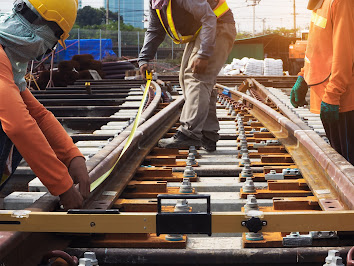
Virginia and the railroad have a long history together, and that history has shaped both the industry and the lawyers who represent the people it injures. Norfolk & Western Railway, now Norfolk Southern, was based in Norfolk, Virginia for generations, and our office sits about 20 minutes away. CSX Transportation, built from the old Atlantic Coast Line, Seaboard, and a string of other merged railroads, kept its headquarters in Richmond for many years. CSX remains a Virginia corporation today, though it now runs operations out of Jacksonville, Florida. Amtrak, meanwhile, sends many routes through the Commonwealth and keeps its main offices just over the northern Virginia line in Washington, D.C. If you were hurt working for any of these railroads, a FELA lawyer from Shapiro, Washburn & Sharp can make a meaningful difference in your claim.
The Venue Fight That Changed Virginia Law
For a long stretch of Virginia history, injured railroad workers had broad freedom to choose where they filed suit. For decades, and arguably for close to a century, the rule allowed a railroad to be sued anywhere it did business or ran tracks in the state. Because Norfolk Southern and CSX had tracks all over Virginia, including in Portsmouth and Norfolk, many railroad worker injury lawsuits were filed in those cities.
The railroads did not care for that arrangement. They viewed Portsmouth and certain other Virginia cities as unfriendly territory, largely because juries there returned significant verdicts against them. So in the 1990s, the railroads lobbied the Virginia Legislature to change the state’s venue laws. Their main target was out-of-state workers, whom they did not want filing claims in Virginia even where the law permitted it.
The result was a venue rule that works against nonresident plaintiffs. Under Virginia Code § 8.01-265, a court can dismiss a case brought by someone who is not a Virginia resident, without prejudice, when the cause of action arose outside the Commonwealth, and a more convenient forum is available in another state. In plain terms, an out-of-state railroad worker whose injury did not happen in Virginia, and whose claim did not arise at least partly in Virginia, can be sent elsewhere to pursue the case.
Courts applying rules like this have generally indicated that if any part of the worker’s claim arose from work in Virginia, the case should not ordinarily be dismissed, even when the worker lives out of state. Virginia’s Supreme Court has also addressed the statute’s validity. Contrary to the assumption that this law has never been tested, Virginia’s high court long ago held that § 8.01-265 does not violate the Constitution simply because it allows dismissal in favor of a more convenient out-of-state forum. So while the statute is real and enforceable, exactly how it applies to a given railroad worker’s claim often turns on where the work and the injury actually occurred.
Decades of Major Railroad Injury Litigation
Our firm has been involved in some of the most significant railroad injury litigation in Virginia over the past two decades. A few examples show the range of this work.
One area our firm helped pioneer was silica and silicosis lung disease claims. One of our attorneys represented a Norfolk Southern worker diagnosed with silicosis back in the 1990s. The railroad fought hard because it recognized the case could open the eyes of other workers to the danger. We developed the evidence by consulting medical and occupational health professionals and taking countless depositions of railroad witnesses. What we learned mattered. All ballast rock contains a percentage of sand, or silica, and when that rock is moved by ballast regulators, brooms, and similar equipment, the visible dust carries harmful amounts of silica that can lodge in the lungs and cause permanent disease over time. There is no fixed timeline for silicosis to develop. Every worker’s lungs respond differently, and a proper medical diagnosis based on exposure history is required.
Our firm has also represented dozens, if not hundreds, of railroad workers diagnosed with asbestos-related disease. That work spans several categories:
- Asbestosis and other asbestos-related lung diseases
- Cancers linked to asbestos exposure
- Mesothelioma, a rare and aggressive cancer
We have handled these claims not only in Virginia but also in North Carolina, West Virginia, South Carolina, and other states, often partnering with local counsel to file suit where needed.
Mesothelioma cases deserve special mention because of how devastating this disease is. This rare cancer is associated almost exclusively with asbestos exposure. There is no cure, and it often causes death within roughly six months regardless of treatment. In rare cases, surgery can extend life somewhat, but a mesothelioma diagnosis is generally a grim one. We have handled mesothelioma claims against railroads and have also pursued the suppliers and other companies that may have provided asbestos-containing products to the railroads.
Why Other Attorneys Send Us Their Railroad Cases
Railroad injury law is a narrow and demanding field, and lawyers know it. Attorneys in other states, including some who do not handle railroad cases themselves, regularly bring us in to handle railroad injury claims in Virginia, North Carolina, West Virginia, and beyond. Our long track record with these cases is why they seek us out. One of our attorneys even coauthored a book-length publication on the subject, titled Railroad Health and Safety: A Litigator’s Guide, published in the American Jurisprudence Trials legal encyclopedia.
Our railroad work covers a wide range of incidents beyond occupational disease, including railroad crossing crashes, derailments, and accidents involving chemical spills. We were involved in the significant Graniteville, South Carolina chlorine derailment, a Norfolk Southern disaster caused by a switch left in the wrong position. Even though that accident happened in South Carolina, residents sought us out because of our extensive experience handling claims against Norfolk Southern. Y
Results That Get the Railroads’ Attention
Two things set our firm apart in this work. First, our roots are literally in railroad injury law, since the firm was founded by an injured railroad worker for the benefit of other injured railroaders. Second, our attorneys carry more than 100 years of combined legal experience, which matters when a railroad and its defense team dig in for a fight.
That combination has produced landmark results. In one case, our firm obtained what was then the largest personal injury verdict for an individual in Virginia history. After an extensive trial, the jury returned a $46 million verdict, and with interest, the verdict reached $60 million. Norfolk Southern appealed, and the case later settled confidentially. We have also represented a rail yard worker who became an incomplete quadriplegic after being struck by an engine. The railroad denied liability and battled nearly to trial before settling for a confidential sum that allowed our client to modify his vehicles and home for wheelchair access and provide for his future care. Results always depend on the facts of each case, but outcomes like these show that when we bring a claim against a railroad, we get its attention.
Talk to Us About Your Railroad Injury Claim
If you or a loved one has been seriously injured, or has developed an occupational disease, while working for a railroad, a FELA lawyer at Shapiro, Washburn & Sharp can review your claim, explain your rights under federal and Virginia law, and fight for the compensation you deserve. Contact us at 833-997-1774 for a free consultation. We have offices in Virginia Beach, Portsmouth, Suffolk, Hampton, Norfolk, and Chesapeake, and we are honored to put our long history in railroad injury law to work for you and your family.