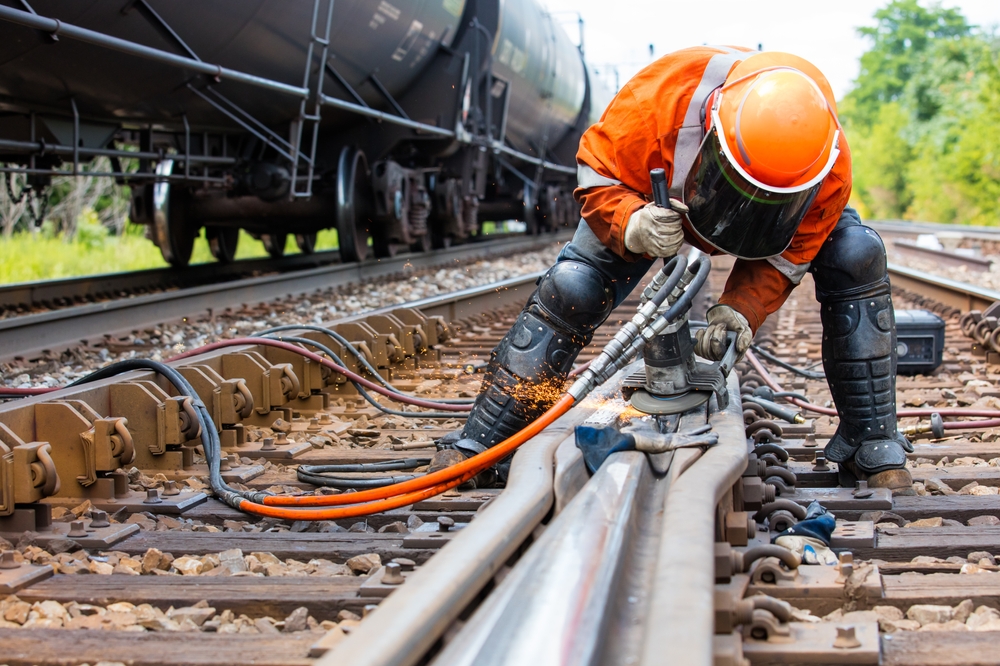
Anyone can be hurt on the railroad at any time. Whether you work as a track worker, a trainman, a clerk, or a shop worker, railroads are dangerous places, and injuries are common. In almost any other industry, a hurt worker turns to a state workers’ compensation program that covers medical bills and part of their lost income. Railroad workers are different. They are not eligible for workers’ comp. Instead, an injured railroader must look to the Federal Employers’ Liability Act, or FELA, to recover compensation. A FELA attorney can help an injured worker understand what that means and how to pursue a claim.
Our firm has been representing injured railroad workers since 1985. Understanding how these injuries happen and how FELA works is the first step toward protecting your rights.
Why FELA, and Not Workers’ Comp
Workers’ comp is a no-fault system: an eligible worker generally receives benefits regardless of who caused the injury, but those benefits are limited and do not include compensation for pain and suffering.
FELA works differently. It allows an injured railroader to bring an individual lawsuit or claim against the railroad when the railroad’s negligence caused the injury. In other words, if you are hurt while working for a railroad because the railroad was careless, you are entitled to seek fair financial compensation, and that compensation can be far fuller than workers’ comp, covering full lost wages, future earning capacity, and pain and suffering. The tradeoff is that FELA requires proving fault, which is where experienced legal help becomes essential.
How Railroad Workers Get Injured
Railroad accidents happen in many ways, but a handful of injury types come up again and again.
Switching Injuries
One of the leading kinds of railway injury is a switching injury. Many railroad track switches are operated by hand, and these heavy steel mechanisms are cumbersome and extremely difficult to throw. Shoulder injuries, especially rotator cuff injuries, are common among workers in this demanding job. Repeatedly forcing a stiff or poorly maintained switch takes a lasting toll on the body.
Coupling Injuries
Railroaders are also frequently hurt while coupling and uncoupling cars. Rail cars are joined by heavy iron joints, and air hoses run between them to supply the air brakes on each car. Workers must maneuver both the hoses and the coupling joints by hand to join or separate cars, and those joints can weigh as much as 80 pounds each. Working every day around heavy, moving equipment like this raises the risk of serious, life-changing injuries. Federal law recognizes the danger: automatic coupler and related safety-appliance requirements exist precisely because manual coupling once maimed and killed so many workers.
Slip-and-Fall Injuries
Slip-and-fall and trip-and-fall accidents are common, especially among engine service workers who constantly climb on and off locomotives and other equipment. Conductors and engineers work in close quarters aboard locomotives, on surfaces that can be slick with oil, grease, and debris. That hazard is serious enough that the Federal Railroad Administration regulates locomotive cab conditions.
Under 49 CFR 229.119, the floors of cabs, passageways, and compartments must be kept free of oil, water, waste, or any obstruction that creates a slipping, tripping, or fire hazard, and those floors must be treated to provide secure footing. This regulation has serious consequences for injured workers. When a railroad violates a federal safety regulation like this one and a worker is hurt as a result, the railroad is strictly liable for the resulting injuries. That means the worker does not have to prove the railroad was careless in the ordinary sense. The violation itself establishes liability, and the contributory negligence defense that can reduce recovery in an ordinary FELA case is not available.
Why These Cases Require an Experienced Attorney
Identifying and establishing a railroad’s liability is not simple, particularly when a safety-regulation violation is involved. It takes a FELA attorney with years of experience to recognize when a regulation like the locomotive cab standard applies, gather evidence proving the violation, and connect that violation to the worker’s injury. Railroads defend these claims aggressively, disputing how an injury happened and whether the worker was at fault, so the investigative groundwork often decides the outcome.
Our attorneys bring more than 100 years of combined legal experience to this work, and we have handled FELA claims for track workers, trainmen, shop workers, and every other class of railroad employee. That experience has produced significant results, including an $8.6 million jury verdict for a railroad worker, with the jury’s negligence findings later affirmed by the state’s highest court. Results depend on the specific facts of each case, but outcomes like that reflect the effort these claims require.
Injured on the Railroad? Contact Us Today
If you were harmed during the course and scope of your employment as a railroad worker, a FELA attorney at Shapiro, Washburn & Sharp can review what happened, determine whether a safety violation played a role, and pursue the full compensation you deserve. Contact us at 833-997-1774 for a free consultation. We have offices in Virginia Beach, Portsmouth, Suffolk, Hampton, Norfolk, and Chesapeake, and we are ready to put our decades of railroad injury experience to work for you and your family.